Our clinical research and results

For years we have observed how mud therapy treatments in the heliotherapy department lend themselves remarkably well to the care of psoriasis

Origins of the research

To date, pharmacological treatments remain the only method for treating the acute eruptive phases of psoriasis, while spa treatments are recommended during the quiescent, non-painful phases of the disease.

For years, we have observed that mud therapy treatments administered in the heliotherapy department work extremely well for psoriasis, also thanks to the unique psychological, social, and environmental conditions created when staying at a thermal spa facility.

Based on the similarities between the mud and waters of the Dead Sea and the raw materials used at the Terme di Cervia thermal baths—and on the results obtained after years of applying mud-bath therapy (in a dedicated solarium)—the project was launched to carefully and systematically evaluate the benefits of traditional spa treatments used during the remission phase of psoriasis, with the aim of enhancing and prolonging the effectiveness of the pharmacological treatment taken during the acute phase.

Clinical research at the Terme di Cervia thermal baths

The ongoing experimentation at the Terme di Cervia thermal baths is based on the hypothesis that spa treatments and pharmacological therapies can complement and reinforce one another through different therapeutic phases.

Epidemiological studies have shown that prolonged use of the same drug often leads to a decrease in its effectiveness, forcing a change in treatment protocol with higher doses or a switch to different medications. When thermal therapy is properly alternated with cycles of pharmacological therapy, this “tolerance” effect can be avoided.
This combined approach—thermal therapy plus pharmacological treatment—results in better therapeutic outcomes with lower drug dosages and fewer side effects. This leads to a more sustainable and satisfying treatment pathway for the patient, as well as significant savings for the National Health Service.

At the Terme di Cervia thermal baths, a team of specialist physicians is carefully evaluating—according to a medical protocol agreed upon with the Local Health Authority—the benefits of spa treatments during the remission phase of psoriasis, with the goal of enhancing and prolonging the effects of pharmacological treatments used during the acute phase.

The experimentation is approved by the Italian Ethics Committee of the Romagna Local Health Authority and is conducted in collaboration with:

  • the Italian Dermatology Unit of the Romagna Local Health Authority,
  • and the Pharmacology and Toxicology Unit, Department of Internal Medicine and Medical Therapy, University of Pavia, Italy.
Psoriasi sul collo
0
years of research
0
treatments performed
0
days of care
null

Primary objective of the experimentation

The primary goal of the psoriasis study at the Terme di Cervia thermal baths is to evaluate the immediate and long-term beneficial effects of traditional mud-bath therapy treatments using Mother Water and “Liman” mud as administered at the Terme di Cervia thermal baths during the remission phase of psoriasis, with or without an arthropathic component.
  • The tool used to measure symptoms is the PASI scale (Psoriasis Area Severity Index), which considers the main characteristics of psoriatic lesions: erythema, scaling, thickening, and the percentage of body surface involved.
  • From the scores assigned to each of these parameters on a progressive severity scale, a formula is used to calculate a total score ranging from 0 (no lesions) to 72 (erythroderma).
  • Symptom measurement using the PASI scale is conducted at:

    • the beginning of the study,
    • the end of the treatment cycle,
    • and at 3 and 6 months after the end of treatment.

  • To evaluate the duration of therapeutic effects, the disease-free interval is measured—that is, the time between the end of thermal treatment and the onset of recurrence, defined as the return of symptoms at at least 50% of the initial PASI score.
null

Secondary objective of the experimentation

The secondary goal of the psoriasis study at the Terme di Cervia thermal baths is to assess patient adherence to first-line medication and the reduction in drug consumption.

In the experimental group, the use of topical or systemic pharmacological therapy should decrease after the cycle of mud-bath therapy. Response to medication should improve thanks to the “wash-out effect” produced by spa treatment. These clinical data are collected during the scheduled follow-up visits.

What the experimentation involves

  • Initial assessment
  • 8 days of mud-bath therapy
  • Final assessment
  • Follow-up check at 3 months after treatment
  • Follow-up check at 6 months after treatment
  • Maintenance treatments
  • Application of Liman mud
Applicazione fanghi Liman

Inclusion criteria for the experiment

Patients are considered eligible for the study if they meet the following criteria:

  • Age over 18 years;

  • Patients with psoriasis, with or without an arthropathic component, in a quiescent phase;

  • Patients able to understand the nature and purpose of the study;

  • Patients who have provided their signed consent to participate in the clinical trial.

Treatments included in the experiment

  • Patients, after undressing, enter the terrace-solarium of the Cervia Thermal Baths.

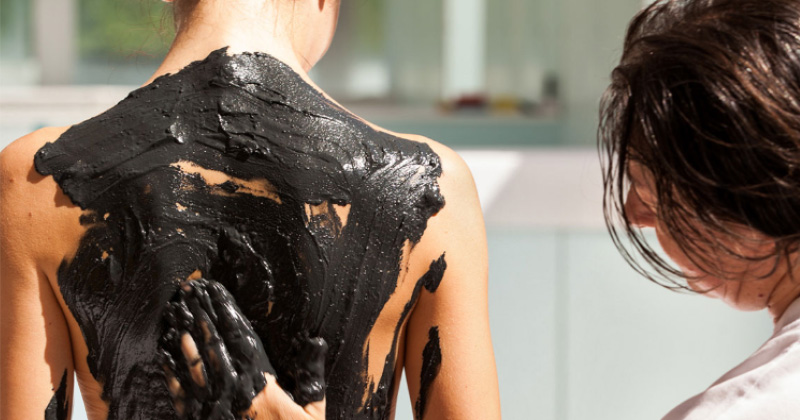
  • The staff apply Liman mud using Cervia’s traditional method.

  • The mud is spread in a thin layer at about 40°C, kept warm with special heaters.

  • The application lasts 30 minutes, during which patients can move freely in the solarium.

  • A cleansing shower follows.

  • Patients then undergo individual balneotherapy with Mother Water at 37°C (adjusted if needed based on blood pressure) and at a salinity of 6° Baumé. The bath, enriched with ozone, lasts 15 minutes.

  • The session continues with heliotherapy in a dedicated solarium. Exposure time is calculated according to skin phototype and sunlight levels. Sun exposure increases gradually—by about 10 minutes each session—from an initial 10–20 minutes up to a maximum of 3 hours per day.

Privacy, information, and data Pprocessing

Before enrollment, all potentially eligible patients receive complete information about the study. To be enrolled, patients must give their consent to the processing of personal data in anonymous and aggregated form, in accordance with Law 675/1996 and Law 196/03 on the protection of individuals and the processing of personal data.

Patients are informed that all study results will remain confidential and will be processed with the utmost privacy. Patients are identified solely by an individual study number, while their names remain undisclosed. Insurance coverage for study participants is provided under the general insurance policy of the Cervia Thermal Baths.

Data collection, monitoring and medical team

As in any scientific study, a control group is used. This is a study sample identical to the group undergoing the actual treatment, but the treatment is not administered to them.

Participants in the study (both the experimental and control groups) undergo evaluations before starting the treatment cycle, at the end of the cycle, and at 3 and 6 months after the treatments.

The initial assessment includes completing the patient record and collecting data to determine the baseline PASI (Psoriasis Area Severity Index). A photographic evaluation of the initial condition is also performed. These parameters are reassessed and collected again at the end-of-treatment visit and during subsequent follow-up evaluations.

In collaboration with

Dermatology Operating Unit, AUSL Romagna – Italy
Biostatistics Operating Unit, AUSL Romagna – Italy
Pharmacology and Toxicology Unit, Department of Internal Medicine and Medical Therapy, University of Pavia – Italy

AUTHORIZED BY
Ethics Committee IRST IRCCS, Area Vasta Romagna – Italy

INSTITUTES
S.R. Institute for the Study and Treatment of Tumors (IRST) – Italy
Scientific Hospitalization and Treatment Institute (IRCCS) – Italy

SCIENTIFIC COORDINATION
Dr. Andrea Flamigni
Specialist in Medical Hydrology, Medical Director of Terme di Cervia S.r.l.

FOLLOW-UP MANAGER
Dr. Vincenzo Maria Albano
Senior Physician, Dermatology Unit of Forlì – Italy

PARTNERSHIP
Dermatology Unit, AUSL Romagna – Italy
Biostatistics Unit, AUSL Romagna – Italy
Pharmacology and Toxicology Unit, University of Pavia – Italy